History of the Hospital
Over a century of local healthcare, community support and public service in Moretonhampstead.
Built to Serve the Community
In the late nineteenth century, the Hambledon family acquired thousands of acres across East Dartmoor, including the manors of Moretonhampstead and North Bovey. These were not simply landholdings, but actively managed estates that played a central role in the economic and social life of the area. As major landowners, the family had both a responsibility and a strong incentive to support the wellbeing and stability of the local community.
As part of this approach, the family invested in housing, infrastructure and community facilities. The establishment of Moretonhampstead Hospital was a natural extension of this wider commitment to health and welfare. While the estate provided the land and funding for the hospital, it was also supported by local subscriptions, donations and fundraising, creating a strong connection between the institution and the community it served.
The hospital formed part of a broader programme of social infrastructure designed to support the long-term wellbeing and resilience of Moretonhampstead. It was not created as a commercial venture, a speculative development or a temporary facility, but as a permanent institution dedicated to serving local people.
The timeline outlines the hospital’s story over more than 120 years, from its origins as a cottage hospital through its integration into the NHS and the community response to its closure.
Timeline
1900–1901: Foundation and Rural Healthcare Reform
Moretonhampstead Hospital was established at a pivotal moment in British healthcare history, when cottage hospitals were being developed to serve rural populations that were poorly served by larger urban hospitals.
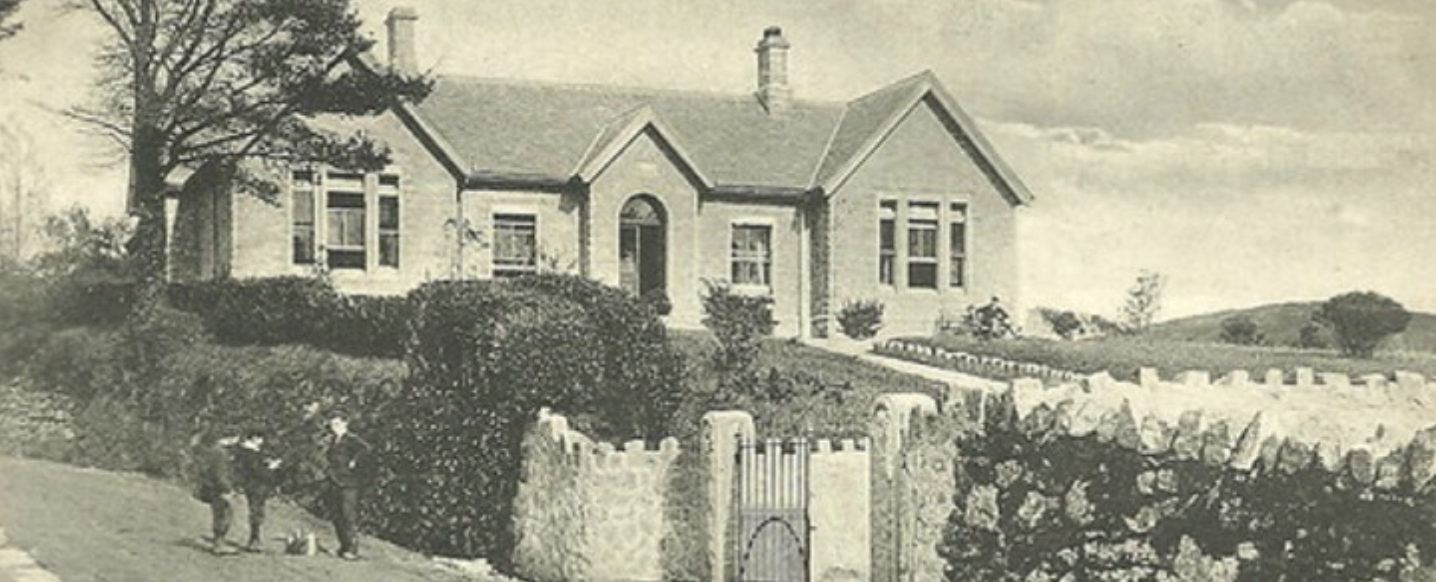
The hospital was funded and endowed by Lord Hambledon, W. F. D. Smith, and built on land formerly part of Addiscott Farm, within the wider Hambledon Estate. Its location, just outside the denser part of the settlement, reflected medical thinking of the time, with an emphasis on fresh air, separation, controlled environments and landscaped surroundings for recovery.
From the outset, the hospital was conceived as a modern rural health institution, aligned with national movements towards decentralised care.
1901–1939: The Cottage Hospital Model
Like many cottage hospitals, Moretonhampstead operated through a mixed model of estate patronage, local subscriptions, donations and community fundraising.
The Hambledon estate provided the land and building, while ongoing support came from local people, businesses and fundraising events. The Hospital Carnival, established in 1901 and renamed in 1908, became an important part of the hospital’s financial and social life.
In its early decades, the hospital provided care for injuries, infections, chronic illness, post-operative recovery and convalescence. It acted as a bridge between home care and distant urban hospitals, particularly for people in rural communities.
1940s: Wartime Use
During the Second World War, the hospital appears in official War Office records as Moretonhampstead Military Hospital. This suggests it was incorporated into wider wartime medical arrangements, supporting the treatment and recovery of military and civilian casualties.
This phase demonstrates the hospital’s adaptability and its value as part of a wider healthcare infrastructure.
1948 Onwards: Transition into the NHS
With the creation of the National Health Service in 1948, Moretonhampstead Hospital moved from a locally funded and trustee-led model into state ownership and public funding.
Although its structure changed, its local role continued. It remained a small rural hospital serving a dispersed population and retained a strong sense of community identity.
1960s–1990s: Adaptation and Community Support
Across the later 20th century, small hospitals faced increasing pressure from advances in medical technology, the growth of district general hospitals and changing expectations around care delivery.
Despite this, Moretonhampstead Hospital continued to operate as a small but valued inpatient facility. Community support also remained strong. In 1997, a fundraising appeal aiming to raise £200,000 reportedly raised £400,000 in just six months, with continued involvement from the Hambledon family.
2000–2013: Service Change and Bed Closure
In the early 21st century, wider NHS policy increasingly emphasised outpatient care, day surgery, home-based treatment and centralised services.
These changes affected many small rural hospitals, including Moretonhampstead. In April 2013, the inpatient beds closed, marking a major shift in the hospital’s role from inpatient hospital to community health facility.
2013–2025: A Reduced but Continuing Health Role
After the closure of inpatient beds, the site continued to support local health services, although at a reduced scale. Services included district nursing, outpatient clinics, community physiotherapy, speech and language therapy, occupational therapy, office space for community health staff and some third-sector care activity.
However, services were gradually reduced, particularly during and after Covid, and many were not returned. At the same time, the building experienced increasing structural deterioration, including roof failure, water ingress and damp-related issues.
In 2016, the site transferred to NHS Property Services, reflecting wider NHS estate consolidation.
2024–2025: Closure and Disposal
In 2024, the hospital was declared surplus to NHS requirements. Services were progressively withdrawn and the building was deemed unsafe due to structural damage.
By June 2025, all services had vacated the site, and by July 2025 the hospital had formally closed. The closure was justified on the basis of safety concerns, low utilisation and high repair costs.
However, this did not mean there was no community need. Local stakeholders continue to emphasise rural healthcare access challenges, transport limitations and the building’s enduring symbolic and practical value.
2025–Present: Community Response
Since closure, the building has remained vacant and is under consideration for sale or transfer. The community response has been significant, including public meetings, petitions, campaigning and exploration of community ownership models.
For many local people, the hospital remains an important public asset with the potential to support future community health and wellbeing provision.